Every pixel on a landing page is a persuasion lever. The best-performing pages don’t just look good — they’re engineered around how humans actually make decisions. After designing hundreds of landing pages with measurable conversion lifts, we’ve distilled the psychology into repeatable patterns.
Cognitive Fluency: Make It Effortless
The first principle is cognitive fluency — people prefer things that are easy to process. This means clean typography, generous whitespace, and a clear visual hierarchy. If a visitor has to think about where to look next, you’ve already lost. The page should feel effortless, like sliding down a well-designed waterslide.
The Power of Social Proof
Social proof is the most powerful conversion tool we have, but most companies deploy it wrong. A wall of logos means nothing. Instead, pair specific metrics with recognizable names: “Airbnb increased checkout completion by 34%.” The specificity signals credibility. Vague claims — “Trusted by thousands” — trigger skepticism.
Loss Aversion: The Strongest Motivator
Loss aversion consistently outperforms gain framing. “Don’t lose $4,200/month to inefficient workflows” hits harder than “Save $4,200/month.” We A/B test both framings for every client, and loss-framed headlines win roughly 65% of the time. The gap widens for higher-ticket products.
Progress Indicators & The Zeigarnik Effect
The Zeigarnik effect — our tendency to remember incomplete tasks — is why progress indicators work so well in multi-step forms. Showing “Step 2 of 3” creates a psychological loop that demands closure. Abandonment rates drop an average of 20% when we add progress indicators to sign-up flows.
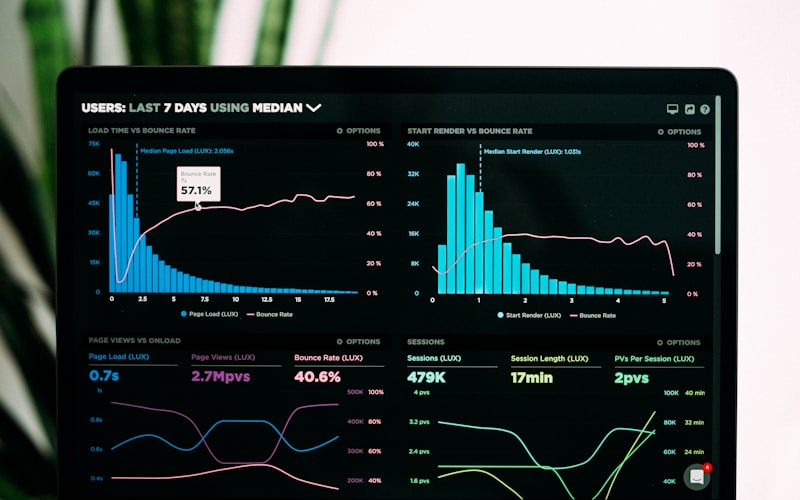
Here’s the before-and-after from a recent client project:

Anchoring & Perceived Value
Anchoring shapes perceived value. Always show the premium plan first. When visitors see the $299/month option before the $99/month one, the cheaper plan feels like a bargain rather than an expense. We restructured a SaaS pricing page this way and saw a 42% increase in mid-tier plan selection.
Ruthless Simplicity Wins
The final principle is reducing decision friction. Every additional choice costs mental energy. The best-performing pages have:
- One clear CTA
- One core message
- Zero navigation links
Strip away everything that isn’t directly serving the conversion goal. Ruthless simplicity wins.

“The best landing pages don’t feel designed. They feel inevitable — like there was only ever one thing you could do next.”
These principles aren’t theoretical — they’re the exact framework we apply to every landing page we design at Weboha. The results speak for themselves.